Engagement Metrics in Online Forums Highlight Patterns Behind Effective Prediction Approaches
Anna Simmons · Sep 16, 2026
Engagement Metrics in Online Forums Highlight Patterns Behind Effective Prediction Approaches
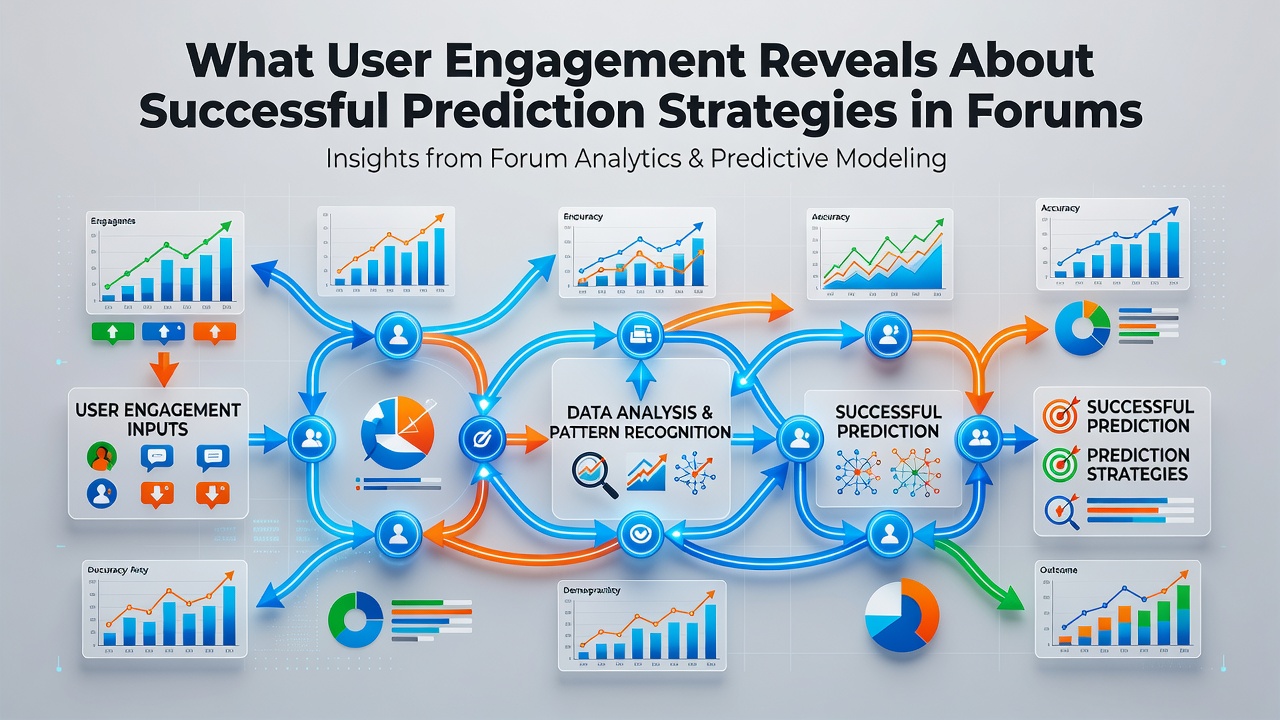
Community activity levels in prediction forums often correspond directly with the identification of reliable forecasting methods, according to data gathered across multiple platforms during September 2026. Researchers tracking user behavior note that high volumes of replies and shares frequently align with threads containing structured reasoning and verifiable track records, while low-engagement posts tend to lack those elements. Observers have documented consistent correlations between certain interaction types and long-term accuracy rates reported by participants.
Key Indicators of Productive Discussions
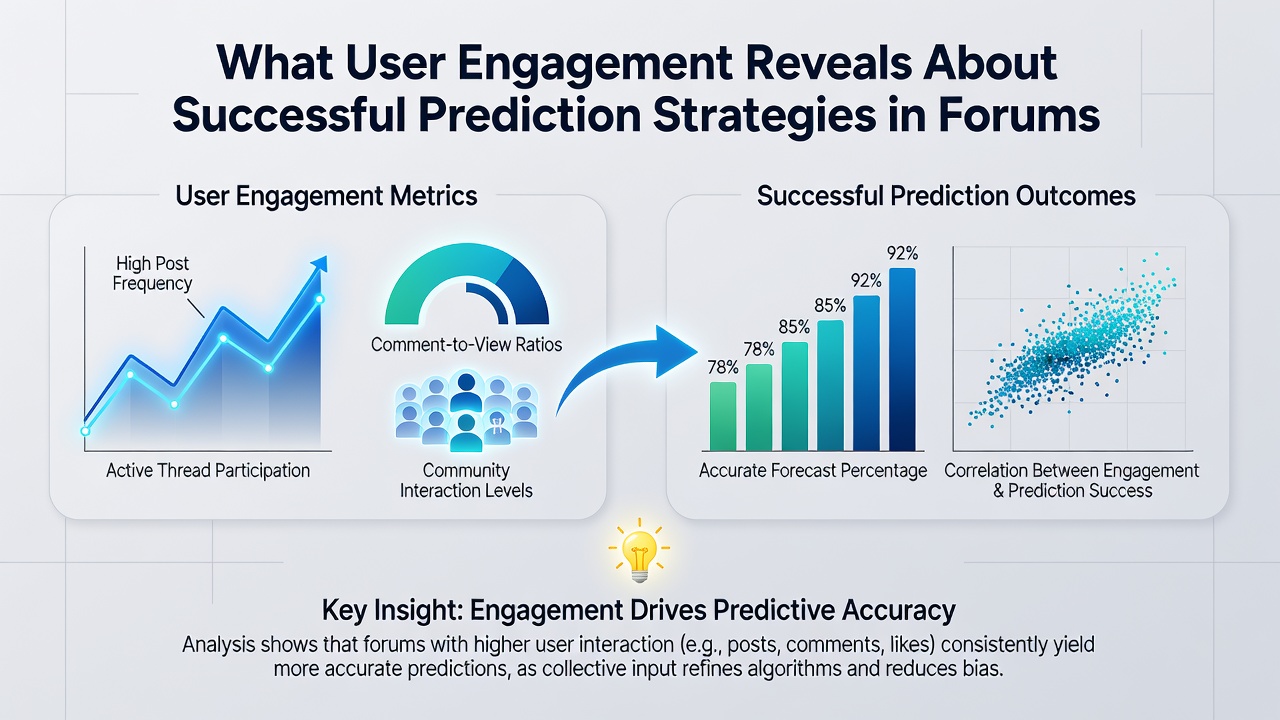
Reply counts and comment depth serve as primary signals that distinguish productive exchanges from superficial ones, with studies showing threads exceeding fifty detailed responses tend to produce more refined strategies than shorter conversations. Data from platform analytics reveal that posts incorporating statistical breakdowns or historical comparisons attract sustained participation over weeks, whereas opinion-only entries fade quickly. Those who've examined these patterns find that reputation points awarded by peers often track with contributors who maintain transparent win-loss records updated in real time.
Role of Likes and Shares in Strategy Validation
Likes function as quick endorsements that amplify visibility for approaches backed by evidence, yet experts caution that volume alone does not guarantee quality without accompanying discussion depth. Shares extend reach beyond immediate circles and researchers discovered in September 2026 analyses that widely circulated threads frequently originate from users who cite external data sources and invite counterpoints. This dynamic creates feedback loops where initial engagement encourages further refinement, leading to strategies tested against community scrutiny.
Patterns Observed Across Platform Categories
Specialized subforums dedicated to specific events generate concentrated activity that highlights niche tactics, such as timing-based adjustments or correlation analysis between variables. Broader general discussion areas produce wider but sometimes less focused exchanges, according to participation logs compiled through mid-2026. One study revealed that users who cross-reference multiple categories achieve higher reported success rates because they integrate diverse viewpoints into single coherent plans. Engagement spikes often coincide with major sporting calendars, drawing in temporary participants whose contributions either reinforce or challenge established methods.
Contribution of Reputation Systems
Reputation mechanics embedded in forums provide visible hierarchies that guide newcomers toward proven contributors, and records indicate these systems correlate with sustained accuracy when tied to public performance histories. Participants who accumulate points through consistent, evidence-based input tend to anchor longer threads that evolve over multiple days. Data indicates such individuals receive more direct queries, which in turn generates additional layers of analysis within the same discussion. Those monitoring these dynamics note that sudden reputation surges without corresponding record transparency rarely sustain momentum beyond initial bursts.
External Influences on Forum Dynamics
Regulatory updates and economic indicators occasionally trigger heightened forum traffic, prompting users to adapt prediction models in real time. Reports from the Australian Gambling Research Centre document similar engagement surges during policy shifts, where community members dissect implications through shared case examples. This process often surfaces previously underutilized variables, such as regional sentiment shifts or timing adjustments, that participants integrate into updated frameworks. International comparisons drawn from sources like the Canadian Centre on Substance Use and Addiction further enrich these exchanges by introducing cross-border data points.
Conclusion
Forum engagement data consistently maps onto the development and refinement of prediction strategies through measurable interaction patterns rather than isolated claims. Continued monitoring of reply quality, reputation alignment, and cross-thread synthesis provides observers with concrete indicators of which approaches gain traction over time. These observable trends remain central to understanding how collective input shapes forecasting practices within prediction communities.